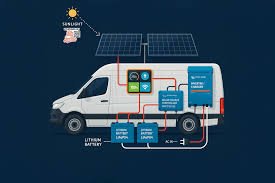

Best Lithium Battery for Van Life Canada: A Plain-English Buyer’s Guide
Your battery is the most important part of your van’s power system. It does not matter how many solar panels you have on the roof. If your battery cannot store and deliver power reliably, your whole system falls apart.
In Canada, where temperatures swing from -30°C in the Prairies to +35°C in the Interior of BC, choosing the right battery matters even more than it does in milder climates. This guide will help you understand your options, compare the most popular lithium batteries for van life, and figure out exactly what you need for your setup.
Why Lithium Beats AGM for Van Life
Before we get into which lithium battery to buy, let us talk about why lithium is worth the higher upfront cost.
Usable Capacity
An AGM battery should only be discharged to 50% of its rated capacity. If you go deeper than that, you shorten its lifespan fast. So a 100Ah AGM battery only gives you 50Ah of usable power.
A lithium LiFePO4 battery can be safely discharged to 80 to 100% of its capacity with no damage. That same 100Ah lithium battery gives you 80 to 100Ah of usable power.
In real terms, one 100Ah lithium battery does the work of two 100Ah AGM batteries.
Lifespan
A typical AGM battery lasts 300 to 500 charge cycles. A good lithium battery lasts 2,000 to 5,000 charge cycles or more. That is 4 to 10 times longer.
Over the life of your van, lithium is almost always cheaper than repeatedly replacing AGM batteries.
Weight
Lithium batteries are significantly lighter than AGM. For van life, where every kilogram matters for handling and fuel economy, this is a real advantage.
Performance in Cold
AGM batteries lose a lot of capacity in cold weather. At -10°C, an AGM battery might only deliver 70% of its rated capacity. Lithium batteries handle cold better, though they do need to be above 0°C to charge safely. More on this below.
Charge Speed
Lithium batteries can accept a much higher charge current than AGM. This means they charge faster from your solar panels and from driving, which is especially important during Canada’s short winter days.
The Cold Charging Issue: What Canadian Van Lifers Need to Know
This is the part that catches a lot of Canadians off guard. Lithium LiFePO4 batteries cannot be safely charged below 0°C. Charging them in freezing temperatures causes permanent damage to the cells.
This is the main challenge with lithium batteries in Canada, but it is easy to manage if you plan ahead.
A self-heating battery is the simplest solution. Some batteries like the Renogy Smart Lithium and the SOK heated battery have a built-in heating element that warms the cells before allowing charging. If you are parking in the Yukon or spending winters in Alberta, this feature is worth every penny.
Insulating your battery box also helps. If your van stays above 0°C inside because you are running a heater, your battery stays warm enough to charge without any issues.
Every quality lithium battery also comes with a Battery Management System, or BMS, that will automatically stop charging if the temperature drops below 0°C. The battery will not charge, but it also will not be damaged. That built in protection is something AGM batteries simply do not offer.
Key Specs to Look For
Here is what to pay attention to when comparing batteries.
Capacity in amp-hours tells you how much energy the battery stores. 100Ah is a common starting point, and 200Ah is better for full-time living with a fridge running around the clock.
Continuous discharge rate tells you how many amps the battery can deliver steadily. Higher is better when you are running an inverter.
Peak discharge rate is the short-term maximum output, which matters when starting appliances with a high surge draw like a coffee maker or a blender.
Charge rate tells you the maximum charging current the battery accepts. A higher charge rate means faster charging from your solar panels or alternator.
The BMS is the built in protection circuit. Look for overcharge, over-discharge, short circuit, over-temperature, and low-temperature protection all in one.
Bluetooth monitoring is a feature on many newer batteries that lets you check voltage, state of charge, and temperature right from your phone.
Warranty shows manufacturer confidence. Look for at least 3 years, and some brands offer 5 to 10 years.
Top Lithium Batteries for Canadian Van Life
Battle Born 100Ah LiFePO4
Battle Born is one of the most trusted names in the van life community. Their 100Ah 12V battery is built in the USA, comes with an excellent BMS, and is backed by a 10 year warranty.
It will not charge below 0°C, but the BMS protects the cells so no damage occurs. The cycle lifespan sits between 3,000 and 5,000 cycles, and you can wire multiple units in series or parallel.
The main downside is the price, which runs roughly 1,200 to 1,500 CAD. There is also no built-in heater for cold charging.
This battery is best for van lifers who want a proven, reliable product and do not mind paying for quality.
Renogy Smart Lithium 100Ah with Self-Heating
Renogy is widely available in Canada and offers a heated version of their lithium battery specifically designed for cold climates. The built-in self-heating works down to -20°C, and Bluetooth app monitoring lets you keep an eye on everything from your phone.
Pricing sits around 700 to 900 CAD, and it ships through Amazon.ca with Canadian delivery. Customer service is not as personal as smaller brands, and the heater does use a small amount of energy.
This battery is the top pick for Canadian van lifers who need a cold-weather solution at a reasonable price.
SOK 100Ah Heated LiFePO4
SOK has built a strong reputation in the van life community as a high-quality, budget-friendly option. Their heated version works down to -30°C, which makes it one of the most capable cold-weather batteries available.
The BMS is actually visible through a transparent section of the case, which is a nice touch. Pricing runs around 400 to 500 USD, but keep in mind it ships from the US, so customs and duties apply for Canadian orders.
This battery is a great choice for budget-conscious van lifers who are comfortable ordering from across the border.
Victron Smart LiFePO4
Victron is the gold standard for off-grid power systems. Their lithium batteries integrate seamlessly with Victron charge controllers, inverters, and battery monitors, and the GX Touch display and VRM portal give you monitoring capabilities that no other brand can match.
The build quality is outstanding and the lifespan is very long, but pricing runs 1,500 to 2,500 CAD per battery. There is no built-in heater, and for a simple setup it is honestly more than most people need.
This battery is best for full-time van lifers building a serious, integrated electrical system.
Ampere Time LiTime 100Ah
Ampere Time, recently rebranded as LiTime, offers solid lithium batteries at an accessible price point and ships to Canada through Amazon.ca. Pricing sits around 350 to 500 CAD, and the BMS and build quality are decent for the money.
The cycle life is shorter than premium brands, customer service can be inconsistent, and there is no self-heating option. Still, it is a reasonable entry point for someone trying lithium for the first time without a large investment.
How Much Battery Do You Need?
A simple rule of thumb for Canadian van life is that your battery bank should store at least 1.5 to 2 days of your daily power usage. That way cloudy days or short winter sunlight do not leave you completely without power.
If you use around 500Wh per day with a very minimal setup and no fridge, a single 100Ah 12V lithium battery giving you 1,200Wh of usable power is fine.
If you use around 1,000Wh per day running a fridge, lights, and a laptop, you want at least 200Ah of lithium giving you 2,400Wh of usable capacity.
If you use 1,500Wh or more per day as a full-time remote worker with multiple devices, go with 200 to 300Ah to stay comfortable.
Wiring Multiple Batteries Together
You can wire lithium batteries in parallel to keep the same voltage while increasing capacity, or in series to keep the same capacity while increasing voltage.
Most van setups in Canada run 12V systems and wire batteries in parallel. Just make sure all batteries in a parallel bank are the same model, the same age, and at the same state of charge when you first connect them.
Some larger setups and newer van builds use 24V or 48V systems for better efficiency, especially when running bigger inverters.
Tips for Getting the Most From Your Battery
Use a battery monitor. A Victron BMV-712 or similar device tracks your real-time state of charge, how many amps you are drawing, and your usage history. It pays for itself quickly by helping you avoid over-discharging.
Try not to discharge below 20%. Lithium can technically go lower, but staying above 20% extends the overall lifespan of your battery bank.
Keep it cool in summer. Lithium batteries do not perform well above 45°C. If your van heats up on hot BC summer days, make sure your battery has proper ventilation.
Match your charge controller to your battery type. Most modern MPPT charge controllers have a lithium setting, and using it properly makes a real difference in charging efficiency.
Check your battery a couple of times a year. Even with a quality BMS, it is worth looking over the connections and terminals for any corrosion or loose fittings.
Frequently Asked Questions
Can I use a lithium battery in a Canadian winter?
Yes, but you need to be careful about charging below 0°C. A battery with a built-in heater, like the Renogy heated lithium or the SOK heated LiFePO4, is the safest option for year round use in Canada. A quality BMS will also prevent charging in freezing temperatures to protect your cells automatically.
Is lithium worth the extra cost over AGM in Canada?
For most Canadian van lifers, yes. The longer lifespan, better cold-weather performance, and higher usable capacity make lithium a smarter long-term investment. You will likely spend more replacing AGM batteries over time than you would have on lithium upfront.
How many amp-hours do I need for van life in Canada?
Most van lifers running a fridge, lights, and a laptop are comfortable with 200Ah of lithium. If you work remotely or run more devices, 300Ah gives you a good buffer for cloudy days and short winter sun hours.
What is the best lithium battery for Canadian van life?
For cold-weather use, the Renogy Smart Lithium with self heating is the most practical choice available in Canada. For a premium setup with full system integration, Victron is the top pick. For a budget-friendly option, SOK or Ampere Time are both worth considering.
Final Thoughts
For Canadian van life, lithium batteries are the best choice if your budget allows. The combination of better cold-weather performance, longer lifespan, faster charging, and more usable capacity makes them ideal for Canadian conditions, especially during winter months with limited sunlight.
If you plan to live in your van year-round, prioritize a battery with a built-in heater. The Renogy Heated Lithium Battery and the SOK Heated Lithium Battery are two of the best lithium batteries for van life in Canada, offering reliable winter performance without an extreme price tag.
Your battery is one of the most important parts of your off-grid setup. Choosing the best lithium battery for van life in Canada will give you more freedom, better reliability, and dependable power for years of travel across the country.