Best Road Trips in Canada: Scenic Routes Every Traveler Should Experience
Canada doesn’t just have beautiful scenery. It has so much of it that choosing where to go first can feel genuinely overwhelming.
From the misty Pacific rainforests of British Columbia to the ancient sea stacks of Newfoundland, this country rewards road trippers like few others. Whether you are planning a cross Canada epic or a focused two-week escape, the best road trips in Canada offer something for every type of traveler.
This guide covers the most spectacular scenic routes Canada has to offer, along with practical planning advice, top campgrounds, and tips for making the most of your time behind the wheel.
What Makes Canada’s Roads So Special?
It is not just the destinations. It is the journey itself.
Canada’s highways pass through raw, unfiltered wilderness in a way that very few countries can match. You can drive for hours through boreal forest without seeing another car. You can pull off at a rest stop in the Rockies and have a glacier view completely to yourself.
Unlike many places where the prettiest scenery sits behind admission fences or expensive tours, Canada’s best landscapes are right there alongside the road. Free, open, and genuinely breathtaking.
For anyone interested in canada road trip vanlife, adventure travel, or a classic driving holiday, Canada is in a league of its own.
The Top Scenic Routes in Canada
1. Icefields Parkway, Alberta The Road That Changes You
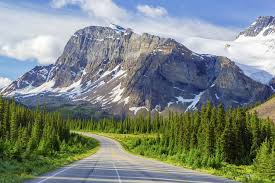
Distance: 232 km | Drive Time: About 3 hours non-stop | Recommended Days: 3 to 5
If you only ever drive one road in Canada, make it the Icefields Parkway. Running between Banff and Jasper National Park, this highway is widely considered one of the most beautiful drives in the world. It absolutely lives up to the hype.
Along the way you will pass Peyto Lake, a wolf-shaped turquoise lake that is one of the most photographed spots in Canada. Bow Lake sits below the Crowfoot Glacier with stunning glacially-fed water. At Athabasca Glacier you can actually walk on a glacier, which is an experience most people never forget. Sunwapta Falls and Athabasca Falls are both thundering waterfalls accessible right from the highway. Jasper townsite is a charming mountain town and a designated Dark Sky Preserve, making the stargazing remarkable.
Best time to drive: Late June through September. The parkway is open year-round but can be challenging in winter without proper experience and tires.
Camping: Columbia Icefield Campground, Wilcox Creek Campground, and Wapiti Campground in Jasper are all excellent. Book through the Parks Canada reservation system well in advance.
2. Cabot Trail, Nova Scotia Ocean Views and Celtic Soul
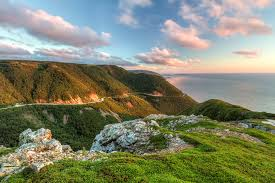
Distance: 298 km loop | Drive Time: About 4 hours non-stop | Recommended Days: 4 to 6
The Cabot Trail on Cape Breton Island is the east coast’s answer to the Icefields Parkway. This loop highway circles the northern tip of Cape Breton Island through Cape Breton Highlands National Park, hugging dramatic cliff-side coastlines that drop hundreds of metres to the Atlantic Ocean below.
What makes the Cabot Trail truly special is the mix of natural beauty and rich culture. You will pass through Acadian fishing villages, Mi’kmaq communities, and Scottish-heritage towns where fiddle music still drifts out of pubs on summer evenings.
Highlights include the Skyline Trail, a 9 km coastal hike ending at a boardwalk perched above the ocean. Cheticamp is a vibrant Acadian town with great local seafood. Pleasant Bay is a tiny fishing harbour where whale watching tours are available. Neil’s Harbour is a picture-perfect village with one of the most charming fish shacks in Nova Scotia. Ingonish Beach offers a rare freshwater meets saltwater beach inside the national park.
Best time to drive: September and early October for fall foliage that rivals New England. July and August for warm weather with all services open. Drive the loop counterclockwise starting from Baddeck so the ocean is on your right for easier pull-overs.
Camping: Broad Cove Campground and Ingonish Beach Campground inside Cape Breton Highlands National Park are the top picks.
3. Sea-to-Sky Highway, British Columbia Mountains Meet the Ocean
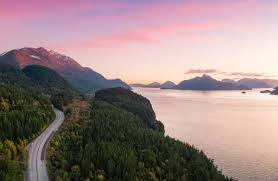
Distance: 120 km from Vancouver to Whistler | Drive Time: About 2 hours non-stop | Recommended Days: 2 to 3
The Sea-to-Sky Highway takes you from Vancouver through increasingly wild mountain scenery to the famous outdoor resort town of Whistler. The drive begins along the edge of Howe Sound, a fjord stretching inland from the Pacific, with mountains plunging straight into the ocean on either side.
Key stops include Porteau Cove Provincial Park for camping right on the water with views across Howe Sound. Shannon Falls Provincial Park has a short walk leading to BC’s third-highest waterfall at 335 metres and is free to visit. Squamish is a rapidly growing adventure hub with world-class rock climbing at the Stawamus Chief. Brandywine Falls is a 70-metre waterfall just off the highway with a short easy trail.
Best time to drive: Year-round, though summer from June through September is ideal for camping and outdoor activities.
4. Trans-Canada Highway The Ultimate Cross-Canada Road Trip
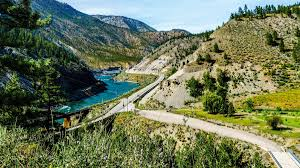
Distance: About 7,800 km from St. John’s to Victoria | Recommended Time: 4 to 8 weeks
No list of the best road trips in Canada would be complete without the Trans-Canada. This is the road that stretches from coast to coast, crossing every province and exposing you to the full, staggering diversity of this country.
Most travelers tackle a section rather than the entire route. The Maritimes leg, the Ontario-Quebec stretch, the Prairies, or the Rocky Mountains are all popular choices. For those who go the full distance, a cross-Canada journey is a genuine rite of passage.
Major highlights along the route include Signal Hill in St. John’s, Quebec City which is the only walled city in North America and a UNESCO World Heritage Site, Ottawa with its excellent free museums, Lake Superior’s wild north shore, Winnipeg’s Canadian Museum for Human Rights, the big open skies of Saskatchewan, Banff National Park, and finally Vancouver at the western end.
Planning tip: Budget at least 3 to 4 weeks minimum for a coast-to-coast drive if you want to actually stop and explore. A one-way trip with a return flight can save both time and money.
5. Dempster Highway, Yukon and Northwest Territories For the True Adventurer
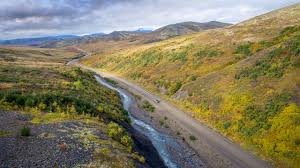
Distance: 736 km from Dawson City to Inuvik | Drive Time: 10 to 12 hours non-stop | Recommended Days: 5 to 7
The Dempster Highway is Canada’s only public road to cross the Arctic Circle and one of the most remote drives in North America. Largely unpaved, it passes through vast tundra, boreal forest, mountain passes, and river crossings via free ferry service.
This is not a beginner route. You need a properly equipped vehicle with AWD or 4WD recommended, two full-size spare tires, extra fuel, bear spray, offline maps, and a satellite communication device.
The rewards are extraordinary. Caribou herds migrating across the highway, a genuine sense of being at the edge of the known world, and northern lights displays in late summer and fall that will stop you cold.
Best time to drive: Late June through August for 24 hour daylight. Mid August through September for a real chance to see the aurora borealis.
Road Trip Planning Canada: Tips for a Smooth Journey
Book campgrounds early. National park campgrounds in Banff and Jasper fill up months in advance. Parks Canada opens reservations in January for the following summer. Check back frequently for cancellations if you miss the opening window.
Know the distances. Toronto to Vancouver is roughly the same driving distance as London to Tehran. Aim for no more than 4 to 5 hours of actual driving per day to leave time for stops and proper exploration.
Download the right apps. The Parks Canada app handles campground reservations and trail maps. iOverlander shows user-reported camping spots including free options. GasBuddy tracks fuel prices by province. Gaia GPS is excellent for offline topographic maps when hiking or going off the beaten path.
Pack for all weather. Even in July, mountain weather can swing from 25 degrees during the day to near-freezing overnight. Always carry a waterproof rain jacket, a warm mid-layer, layers for sleeping, sunscreen, and sturdy hiking boots.
Stay bear aware. Always carry bear spray and know how to use it. Store all food and scented items in a hard-sided vehicle or bear box when not in use. Never approach wildlife for photos. Make noise while hiking so you never surprise a bear on the trail. Parks Canada wildlife safety resources are available free at trailheads throughout the national parks.
The Best Scenic Drives for Different Travel Styles
For families: The Cabot Trail in Nova Scotia is safe, manageable, and full of kid-friendly wildlife watching including whales, bald eagles, and seals.
For couples: The Icefields Parkway offers romantic mountain scenery, hot springs in Banff, and quiet lakeside campgrounds perfect for two.
For solo adventurers: The Dempster Highway is remote, challenging, and utterly unlike anywhere else in Canada.
For first-time visitors: The Sea-to-Sky Highway is close to Vancouver, easy to navigate, and absolutely stunning within a very short distance from the city.
For history and culture lovers: The Trans-Canada through Quebec and Ontario passes UNESCO World Heritage cities, Indigenous cultural sites, and layers of Canadian history that most visitors never get to see.
FAQs
Do I need an international driver’s license to drive in Canada? If you hold a license from the US, UK, Australia, EU countries, or most other nations, you do not need an international license for short-term visits of up to three months. Always carry your home country license and your passport.
How is cellphone coverage on Canadian highways? Coverage varies significantly. Major routes near cities have good 4G service. Remote routes like the Dempster Highway have almost none. Always download offline maps before leaving any city and consider a satellite communicator for truly remote areas.
What is the cheapest province for fuel in Canada? Fuel prices are generally lowest in Alberta, which has no provincial fuel tax, and highest in BC and Atlantic Canada. If your route includes Alberta, fill up there whenever possible.
Can Americans drive into Canada for a road trip? Yes. American citizens and permanent residents can enter Canada with a valid passport. No special driving permit is needed and US vehicle insurance is generally valid in Canada, though you should confirm with your insurer before the trip.
Is it safe to drive in Canada as a tourist? Canada has a strong road safety record. The main things to watch for are wildlife on the road especially at dawn and dusk, long distances between fuel stops in remote areas, and winter road conditions if you are traveling outside of summer. Top up your tank whenever you can in rural regions and you will be fine.
Your Great Canadian Road Trip Awaits
Canada’s roads are some of the most spectacular on earth and the good news is that you do not need a huge budget or months of experience to enjoy them. A well-planned trip focused on even a single province can deliver memories that genuinely last a lifetime.
Pick a route that excites you. Build a rough itinerary with a few anchor stops and plenty of breathing room. Book your national park campgrounds early, download your offline maps, and stock up on snacks before you leave the last big town.
Then drive. Let Canada do the rest.
The best road trips in Canada are waiting. The only thing you need to do is start.