Free Camping Canada The Complete Guide to Camping for Free Across the Country
One of the best things about vanlife in Canada is how much of it you can do for free.
While many countries restrict camping outside of official sites, Canada offers millions of hectares of public land where free dispersed camping is completely legal. If you know where to look and what rules apply, you can travel across this country for weeks at a time with almost zero accommodation costs.
This guide covers everything you need to know about free camping canada including where to find spots, how to camp legally and responsibly, and what to expect province by province.
What Is Free Camping and Why Does It Matter?
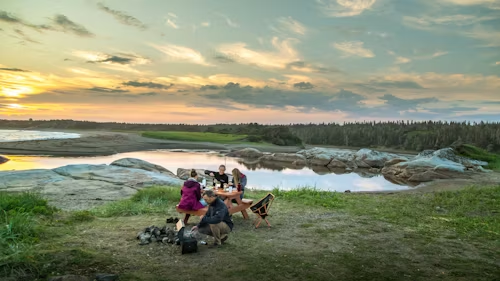
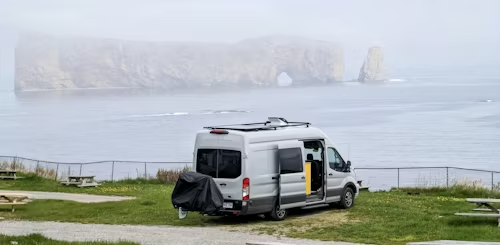
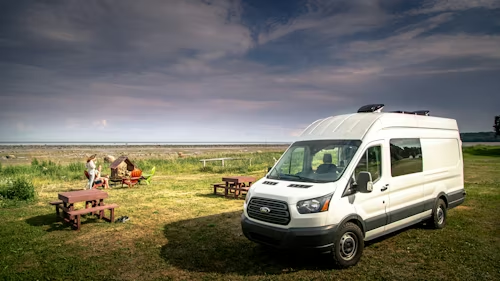
Free camping in Canada refers to camping outside of paid campgrounds without any nightly fee. This includes dispersed camping on Crown land, camping at BC recreation sites, overnight parking at highway rest areas, and using informal pullouts and forest service roads that allow overnight stays.
For vanlifers and road trippers, free camping changes the financial equation of travel completely. Instead of spending CAD $25 to $40 every night at a campground, you spend nothing. Over a month of travel that adds up to CAD $750 to $1,200 in savings, which is significant for anyone on a long trip.
But free camping is not just about money. It is also about solitude, flexibility, and connection with nature. The best free camping spots in canada are often the most remote and the most beautiful, places you would never find by booking through an official reservation system.
Is Wild Camping Legal in Canada?
Before diving into the specifics, let us address the most common question directly.
Is wild camping legal in canada? Yes, in many situations it is. The key is understanding what type of land you are on and what the rules are for that specific area.
Crown land is the foundation of free camping in Canada. Crown land is government-owned public land and in most provinces dispersed camping on Crown land is a recognized and legal activity. This is not camping in a grey area. It is a legitimate use of public land that millions of Canadians enjoy every year.
However wild camping is not legal everywhere. Camping inside national park boundaries is only permitted in designated campgrounds. Camping on private property without permission is trespassing. Some areas of Crown land are restricted for environmental reasons.
The practical rule is simple. If you are on Crown land, outside a national or provincial park boundary, and not in a specifically restricted zone, you can almost certainly camp there legally. When in doubt, check with the local provincial government authority or land management office before setting up.
Free Camping Spots in Canada: The Best Resources
Finding free camping spots in canada has never been easier thanks to a handful of excellent apps and websites built specifically for this purpose.
iOverlander is the most comprehensive free camping resource available for Canada. It has thousands of user-reported spots across every province and territory including Crown land sites, BC recreation sites, rest areas, and informal pullouts. Each listing has recent comments from other travelers so you get real, current information about what to expect. Download it before you leave cell coverage.
Campendium is another strong option with detailed user reviews and photos for each camping spot. It works particularly well for finding spots in BC and the western provinces.
BC Recreation Sites and Trails is an official government resource for British Columbia’s extensive network of free maintained recreation sites. These are clearly mapped, regularly updated, and accessible to most standard vans without needing four-wheel drive. Visit sitesandtrailsbc.ca to browse sites by region before your trip.
The Ontario Crown Land Use Policy Atlas available through the Ontario government website shows exactly where Crown land camping is permitted across Ontario. This is an invaluable resource for anyone planning to camp in northern Ontario.
Gaia GPS and Maps.me both allow you to download offline maps and are essential for navigating to remote free camping spots where cell coverage does not exist.
Crown Land Camping Canada: Everything You Need to Know
Crown land camping canada is the backbone of free camping across the country. Here is everything you need to understand before you set up your first free camp.
What Is Crown Land?
Crown land is public land owned by the federal or provincial government on behalf of all Canadians. It makes up a significant portion of Canada’s total land area, particularly in the north and in rural regions of every province. Because it is public land, Canadians and visitors have the right to access and use it for recreational purposes including camping, subject to specific rules.
How Long Can You Stay?
Most provinces allow dispersed camping on Crown land for up to 14 consecutive days in one spot before you need to move on. After that you must relocate, usually a minimum distance away from your previous site. This prevents any one person or group from effectively occupying a spot permanently.
What Facilities Are Available?
None. Crown land camping is true boondocking. There are no toilets, no water taps, no garbage collection, no fire rings, and no camp hosts. You are entirely self-sufficient. This means bringing all your own water, managing your own waste, and packing out absolutely everything you bring in.
What About Fires?
Fires are permitted on most Crown land outside of active fire ban periods. During summer wildfire season, fire bans can be declared at very short notice across large areas of BC, Alberta, and other provinces. Always check the current fire ban status for your specific region before lighting anything. In BC, check the BC Wildfire Service for current restrictions.
Free Camping by Province: Quick Reference Guide
British Columbia is the top province for free camping in Canada. The BC government maintains hundreds of free recreation sites across the province that are accessible and well-distributed. Dispersed Crown land camping is also widely available outside of restricted areas. Maximum stay is 14 days.
Alberta offers Crown land camping in the foothills, northern forests, and rural areas outside of national and provincial park boundaries. Alberta Environment and Parks provides guidance on which areas are open for dispersed camping.
Ontario has the most Crown land by total area of any province, most of it in the north. Northern Ontario is a boondocking paradise with lakes, forests, and quiet wilderness stretching in every direction. Southern Ontario has less Crown land available so research specific areas before heading out.
Saskatchewan and Manitoba are often overlooked by vanlifers but offer excellent and uncrowded free camping in their northern Crown land regions. Both provinces have extensive boreal forest and lake country that rewards explorers willing to leave the main tourist routes.
Quebec has Crown land camping available but the rules are more complex and vary significantly by region. Research thoroughly through the Quebec government’s natural resources ministry for any specific areas you plan to visit.
Yukon and Northwest Territories are frontier territory for free camping. Most public land allows dispersed camping and the scenery is unlike anything in the southern provinces. The Dempster Highway corridor in particular offers extraordinary free camping opportunities through subarctic tundra.
Nova Scotia, New Brunswick, and PEI have less Crown land than western provinces but do have provincial forestry roads and some public land areas where free camping is permitted. Check with each province’s natural resources department for current guidance.
Camping Rules Canada Provinces: Stay Legal and Responsible
No matter where you camp for free in Canada, the same core responsibilities apply to every traveler.
Leave No Trace is the foundation of everything. Pack out all garbage including food scraps, packaging, and any other waste. Do not bury garbage as wildlife will dig it up. Leave your site looking exactly as you found it, or better.
Handle human waste properly. Without toilet facilities available you need to either carry a portable toilet and pack out waste bags, or use the cat hole method burying waste at least 15 to 20 cm deep and at least 60 metres from any water source. Never leave waste exposed on the surface.
Respect water sources. Never wash dishes, brush teeth, or use soap directly in lakes or streams. Carry water away from the source and dispose of grey water at least 60 metres from any water body.
Manage noise and light pollution. Free camping in wilderness areas means sharing space with wildlife and sometimes other travelers seeking quiet. Keep noise levels low, especially at night, and use low-impact lighting.
Follow wildlife protocols. In bear country store all food, garbage, cooking equipment, and scented items inside your locked van at all times. Never leave food outside overnight. Carry bear spray and know exactly how to use it.
Boondocking Tips for Free Camping Success
Boondocking effectively takes a little practice but these tips will help you get it right from your very first free camp.
Arrive early. Finding a free site in daylight is dramatically easier and safer than arriving after dark. Plan to be at your intended camping area at least two hours before sunset.
Always have a backup plan. Crown land sites can be occupied, access roads can be washed out, and fire bans can close areas without warning. Know two or three potential spots for each night so you are never scrambling without options.
Fill your water tank at every opportunity. In remote areas the next water source can be farther away than you expect. Fill up completely whenever you pass through a town with a water tap.
Download offline maps before leaving cell coverage. Apps like Gaia GPS, Maps.me, and the offline mode in Google Maps are essential for navigating to remote spots without a signal.
Keep a tidy and organized van. In a small living space clutter accumulates fast. A tidy van is a more comfortable and functional home on wheels, especially during extended free camping away from services.
FAQs
Do I need any permit for Crown land camping in Canada? In most provinces no permit is required for short term dispersed camping on Crown land. However some specific areas require permits or have restrictions. Always check with the relevant provincial land management authority for any area you plan to camp in, particularly if you are staying for multiple days or camping in a sensitive ecological zone.
What is the difference between Crown land camping and camping at a BC recreation site? BC recreation sites are maintained and designated free camping areas managed by the provincial government. They often have basic amenities like fire rings and pit toilets and are marked on maps. Crown land camping outside of these sites means fully dispersed camping with no facilities of any kind. Both are free but recreation sites offer slightly more structure and are easier to find.
Can international visitors use Crown land camping in Canada? Yes. Crown land camping rules in Canada apply equally to residents and visitors. International travelers are welcome to camp on Crown land subject to the same rules and stay limits that apply to everyone. Just ensure you follow Leave No Trace principles and respect all local regulations during your visit.
Final Thoughts
Free camping canada is one of the genuine highlights of traveling through this country. The combination of legal Crown land access, an excellent network of BC recreation sites, and highway rest areas that allow overnight stays means you can travel across Canada for weeks with minimal accommodation costs.
Know the rules for each province, use the right apps to find your spots, practice Leave No Trace without exception, and you will have an incredible and completely affordable adventure across one of the world’s most spectacular countries.