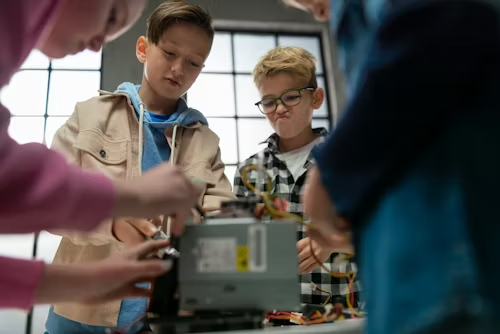

In today’s rapidly evolving digital world, coding has emerged as an essential skill, not just for career prospects but also for overall cognitive development. Introducing children to coding at an early age can open doors to creativity, innovation, and enhanced problem-solving abilities. Coding classes for kids are designed to make learning programming engaging and interactive, ensuring that children not only gain technical skills but also develop a mindset for logical thinking and creative expression.
Why Coding is Important for Children
Coding is more than just writing lines of instructions for a computer; it is a way of teaching children how to think critically and solve problems efficiently. When kids learn to code, they are learning a universal language of logic, structure, and creativity. This foundation helps them approach challenges systematically, break down complex problems into smaller, manageable parts, and find innovative solutions.
Moreover, the demand for digital literacy is increasing across every industry. By learning to code early, children gain a competitive edge and confidence in handling technology-related tasks, whether in school projects or future professional careers.
Enhancing Creativity Through Coding
Many parents assume coding is strictly technical, but in reality, it offers ample opportunities for creative expression. Coding encourages children to design their own games, animations, and apps, fostering imagination and artistic thinking. When a child programs a character to move across a screen or builds a virtual world, they are essentially creating a story.
This creative process allows children to experiment with ideas, explore multiple approaches, and see the immediate results of their efforts. It teaches them that there is no single solution to a problem, nurturing flexibility in thinking and innovation.
Developing Problem-Solving Skills
Problem-solving is at the heart of coding. Every project presents a challenge, whether it’s debugging a program or figuring out how to make an animation work smoothly. Through coding, children learn persistence, resilience, and analytical thinking.
Breaking down a complex task into smaller steps—known as decomposition—is a key programming strategy. This technique helps children understand that large problems can be solved by tackling smaller, simpler parts one at a time. As a result, coding classes train children to approach real-life challenges with patience and systematic reasoning.
Boosting Confidence and Self-Esteem
Finishing a coding project provides children with a real sense of accomplishment. Whether it’s a game they built from scratch or an app that solves a problem, finishing a project boosts their confidence. Coding classes provide a safe space where children can experiment, make mistakes, and learn from them. This trial-and-error learning is crucial for building self-esteem and encouraging independent thinking.
Furthermore, coding projects often include collaborative elements, where children work together, share ideas, and solve problems collectively. This teamwork enhances communication skills, empathy, and the ability to appreciate multiple perspectives.
Preparing Kids for the Future
Technology is transforming the world at an unprecedented pace, and digital literacy is becoming as important as reading and writing. Coding classes prepare children for a future where understanding technology will be vital. Even if a child does not pursue a career in computer science, the logical thinking, creativity, and problem-solving skills gained through coding are universally applicable.
Many coding programs introduce children to foundational concepts like algorithms, loops, and conditional statements, which develop their analytical abilities. These concepts are not only useful in programming but also in mathematics, science, and everyday decision-making.
Choosing the Right Coding Class
When selecting a coding class for kids, parents should consider several factors:
- Age-Appropriate Curriculum: Classes should be tailored to the child’s age and learning pace. Beginners benefit from visual programming tools like Scratch, while older children can gradually move to text-based languages like Python.
- Interactive Learning: Hands-on projects and real-world applications make coding engaging and meaningful.
- Qualified Instructors: Experienced educators who understand both coding and child development can make a significant difference in a child’s learning experience.
- Small Class Sizes: Personalized attention allows instructors to guide children through challenges and encourage creative thinking.
- Collaborative Environment: Opportunities to work in teams help children develop communication and interpersonal skills alongside technical skills.
The Role of Coding in Overall Development
Coding contributes to multiple areas of a child’s development:
- Cognitive Skills: Enhances logic, memory, and critical thinking.
- Emotional Skills: Builds patience, resilience, and adaptability.
- Social Skills: Encourages collaboration, teamwork, and communication.
- Academic Performance: Strengthens abilities in math, science, and problem-solving across subjects.
In essence, coding is not just a technical skill but a tool for holistic growth, equipping children to navigate the complexities of a technology-driven world confidently.
Fun and Engaging Coding Activities
To make coding enjoyable, many programs incorporate gamified elements such as coding challenges, competitions, and interactive projects. Kids can create animated stories, design websites, build games, and even explore robotics. These activities blend creativity with logic, keeping children motivated while reinforcing coding concepts.
Additionally, many platforms provide instant feedback, allowing children to see the results of their code immediately. This immediate reinforcement encourages experimentation and continuous learning, reinforcing problem-solving strategies and creative thinking.
Conclusion
Coding classes for kids are more than just a way to learn programming—they are a gateway to nurturing creativity, enhancing problem-solving skills, and fostering a lifelong love of learning. By introducing children to coding early, parents can equip them with essential skills for the future, ensuring they are not just consumers of technology, but creators and innovators.
Investing in a quality coding program lays a strong foundation for intellectual growth, personal development, and a successful journey in an increasingly digital world.
Suggestion Topics
Coding Class for Kids: Building Essential Skills for a Digital Future
Why Coding Classes for Kids Are Becoming a Must-Have in Modern Education
A Parent’s Handbook for Selecting the Ideal Coding Class for Children
Top Reasons to Enroll Your Child in a Coding Class for Early Tech Learning